

Blogs
Living in the Australian bush
with the plants and wildlife
Search for a blog
Bushfires Heat Koalas and Rain
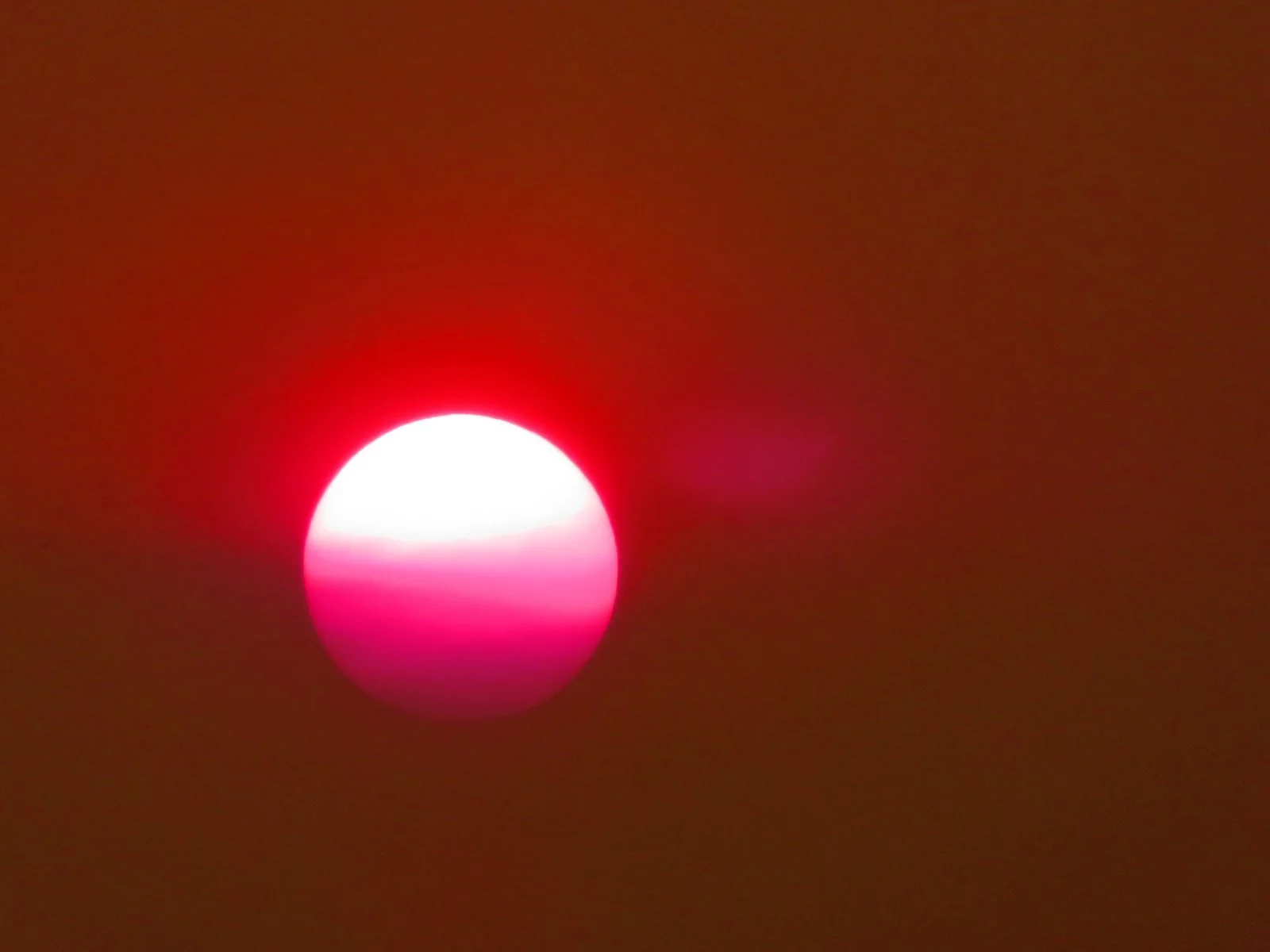
The summer is almost over and it has rained. The fires have stopped. The days are almost constantly hot but unlike the later part of 2019, during the fires, the humidity is high now. A bit like a normal summer really.
The dry continues - fires, orchids and cockatoos
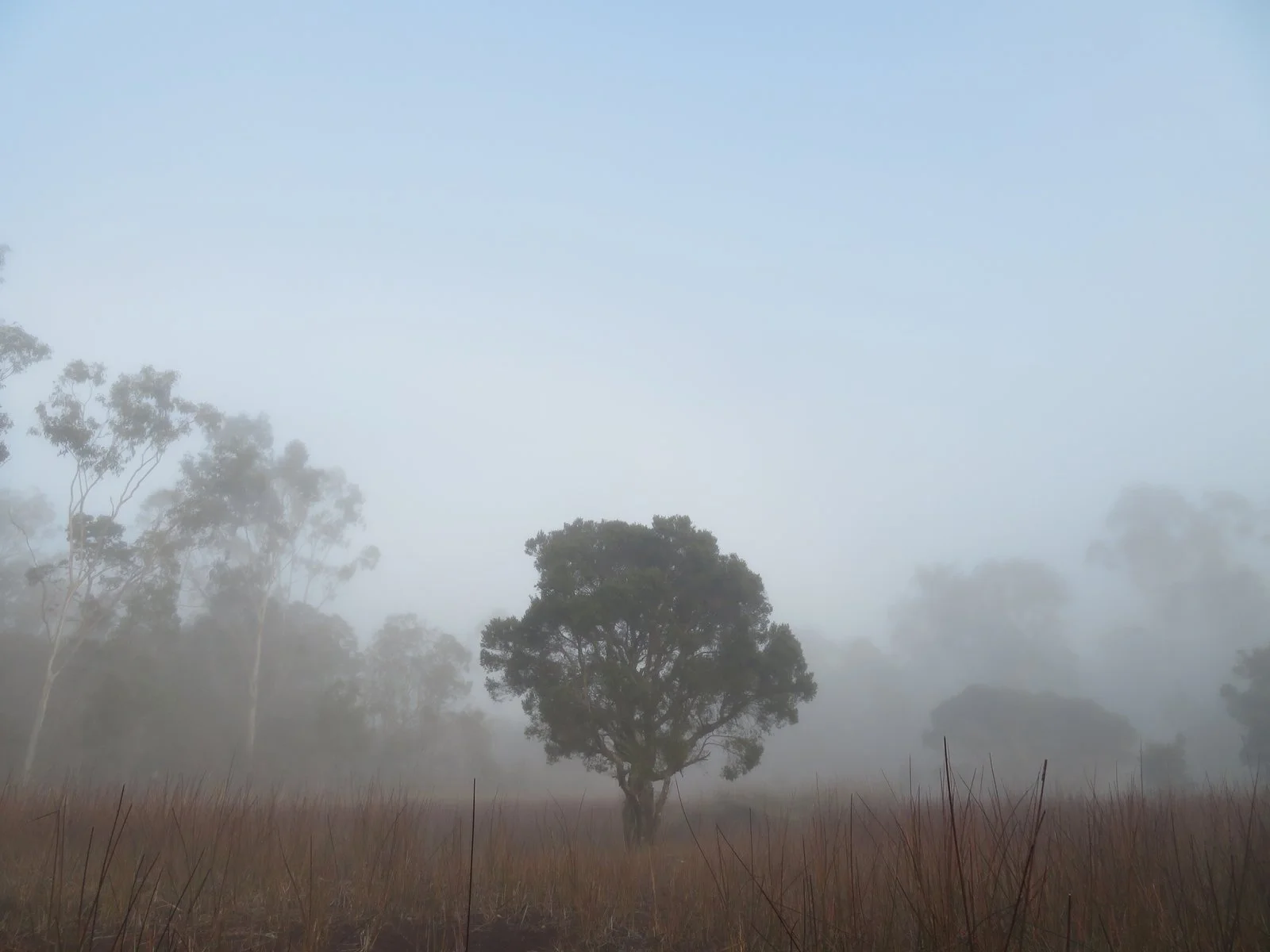
It rained - a little. Enough to wet the dust.
Just nine millimetres for the month of September. August was just fourteen millimetres. At least it rained, I suppose. Two years ago it didn't rain for three months straight. Maybe that is when the dry really started here. Of course it had been dry over the range for a while by then, years in some places.
Winter 2019
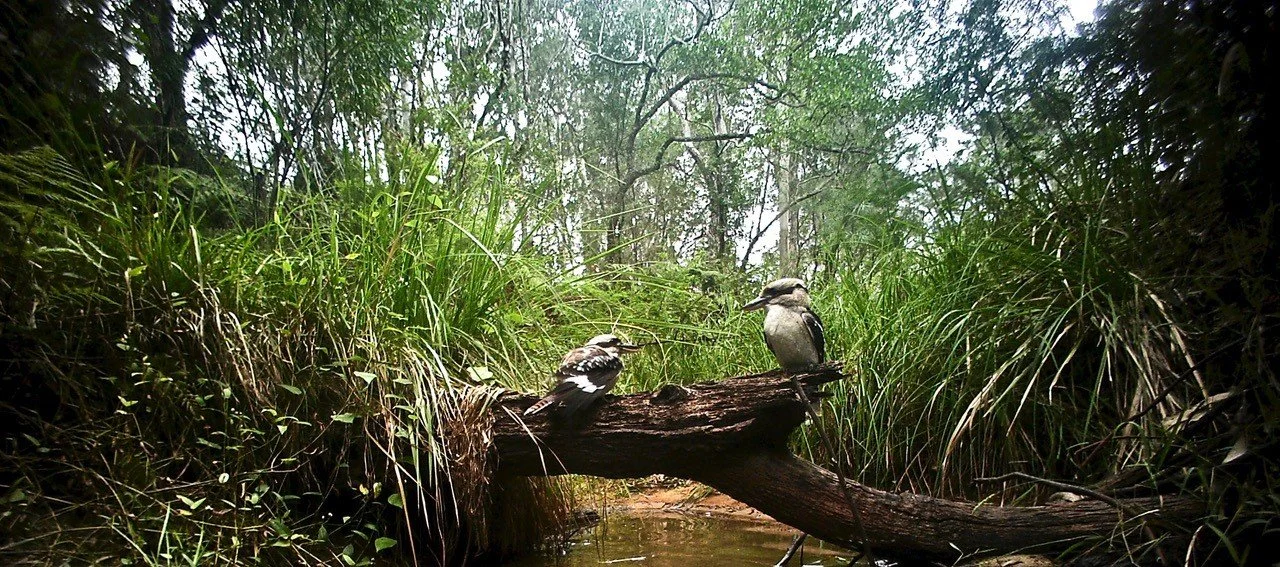
The creeks are dry except for a few shallow pools. We set up a sensor camera on one of these refuges and watched it disappear. The wildlife visiting this small waterhole was extraordinary. A great number of birds, a water dragon, giant water spider, many Red-necked Wallaby’s, a feral cat and feral pigs!
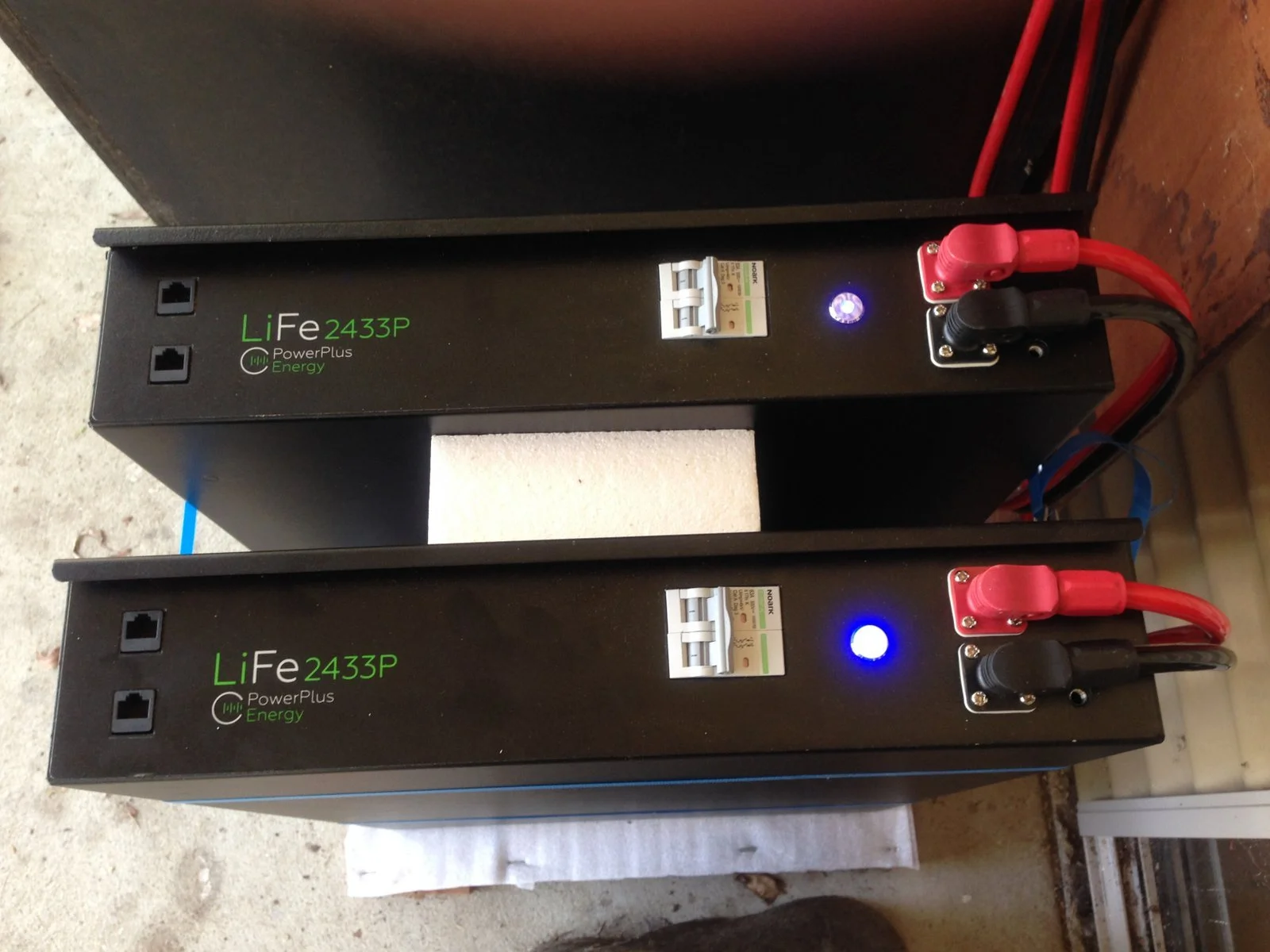
Lithium Battery Info
This is some more detailed information on lithium batteries that we have been able to glean in our journey to buying new batteries. We are definitely not experts. If you notice something that isn't correct here please comment and let us know.
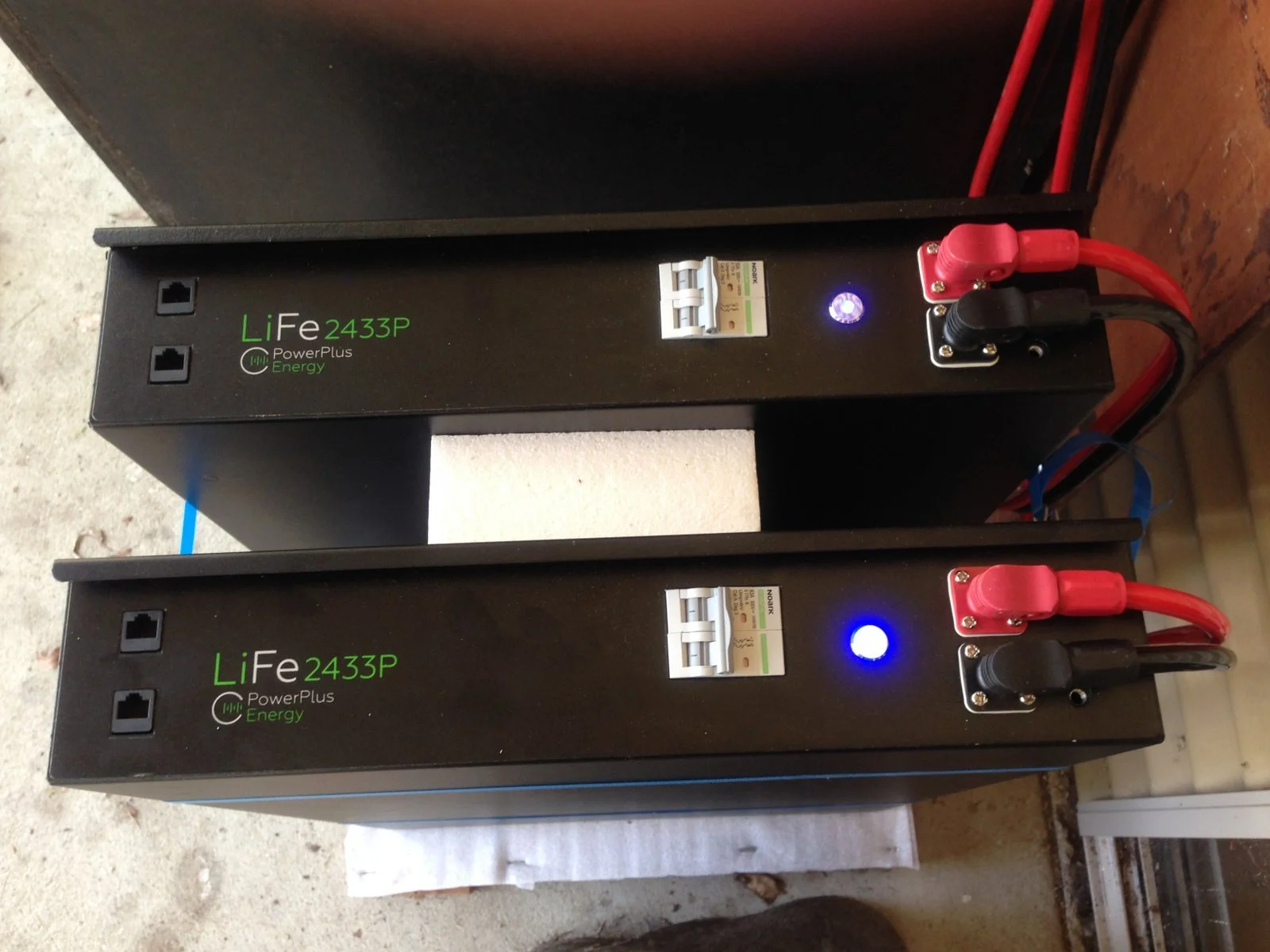
Lead Acid to Lithium Batteries for of Grid
We woke up one day to find our power system completely failed. The inverter, which converts DC to 240V AC, has a low voltage light blinking. The voltage has dropped to a point where the system shut down. Our battery has failed. We knew it was coming since we had been testing the batteries but now we are confronted with the reality.
Follow our journey as we learnt more about batteries.
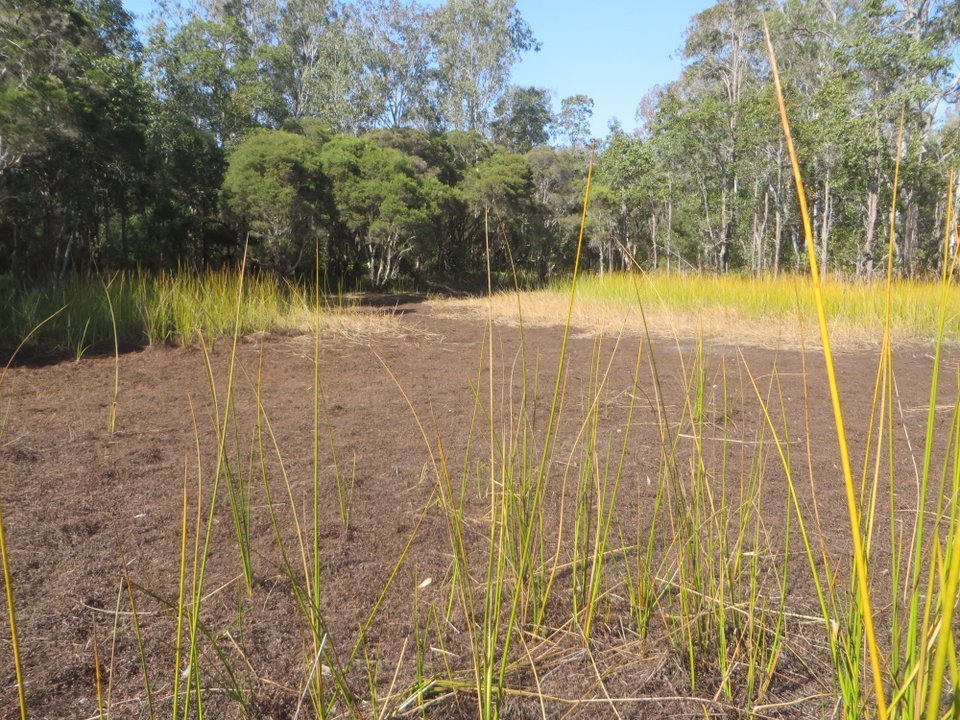
Winter Dry
A few light frosts arrived in June and the grass died off. Then came the real frosts. It dropped below zero several days in a row, freezing the hose and leaving a layer of ice on the water bowls left out for the animals.
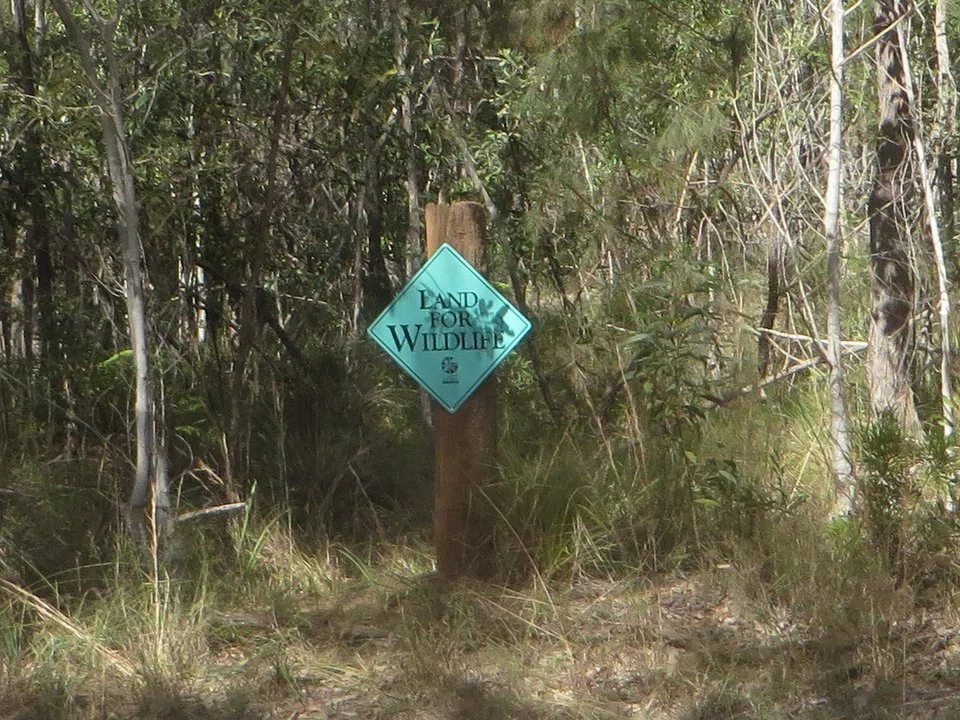
Land for Wildlife
We had seen them around this area but didn't really know what they meant apart from the obvious. It wasn't until our local council, while searching for an endangered plant species in our area, put us in contact with The Clarence Environment Centre.
The Community Environment Network (CEN) and specifically in this region the Clarence Environment Centre (CEC) run the "Land for Wildlife" project. It aims to encourage and assist private landholders with nature conservation.
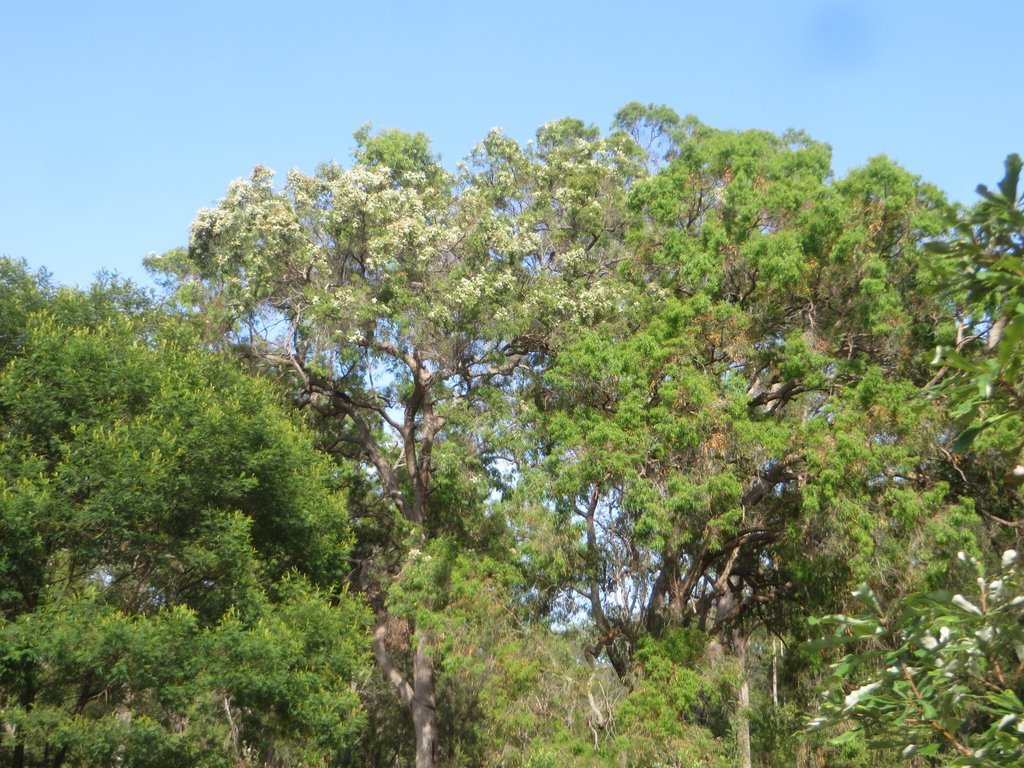
Narrow-leaved Apple
One of our most common trees found growing around the house and surrounds is the narrow-leaved apple (angophora paludosa).
Wildlife Magic
One of the many magic things about living in the bush is the wildlife. It is a privilege to have them so close and living their life in front of us.
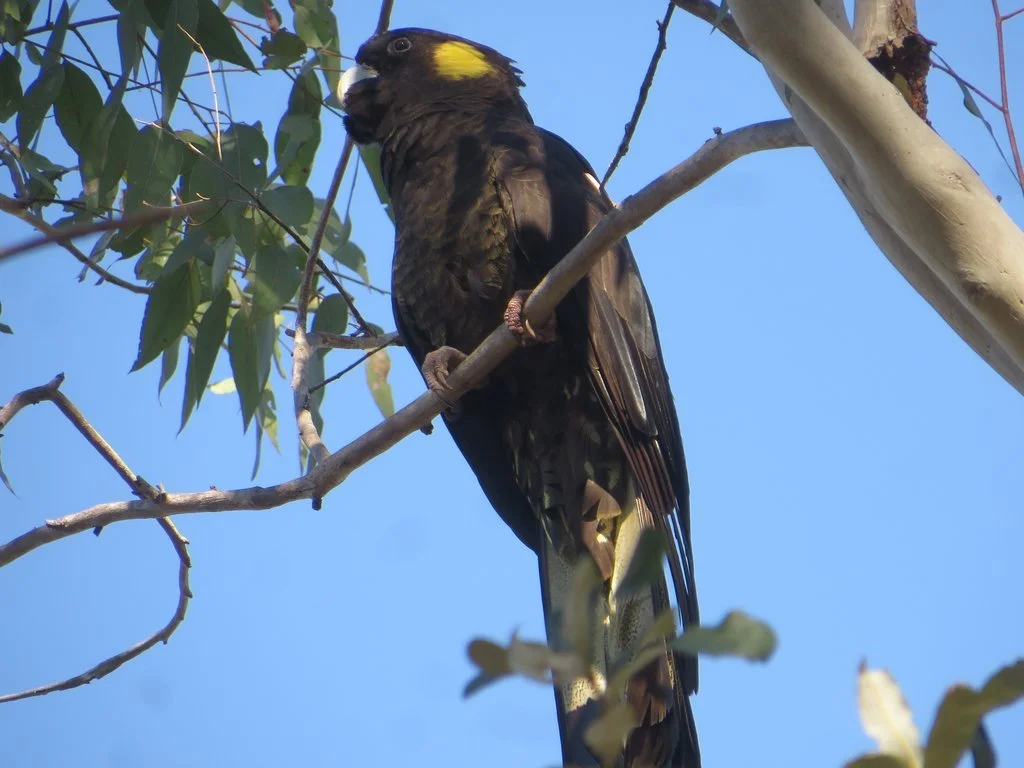
Yellow-tailed black cockatoo
The yellow-tailed black cockatoo, calyptorhynchus funereus, are regular visitors in this area. These majestic birds, growing to around 55 - 60cm in length, are an impressive sight when in flight, particularly when in flocks.
The coast banksias, prolific around here, are a big attraction for this cockatoo as they eat their seeds, often arriving in family groups of usually three birds, two adults and a very noisy youngster, but sometimes in flocks of sixty or more birds.
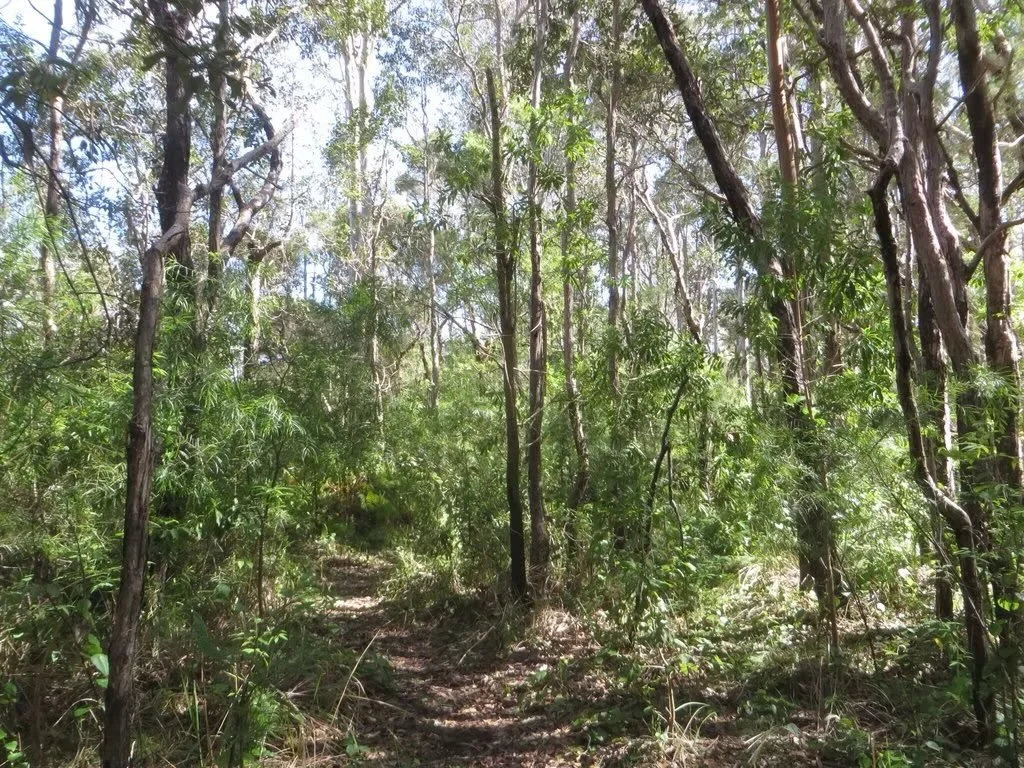
the Young Forest
The young forest is cool. The swamp turpentine and the flooded gums fight for the light forming a protective canopy. The forest ferns love the shade too, flourishing this close to the creek. The path winds through the trees following the creek.
The Shortest Days
Winters on the north coast of NSW are usually beautiful blue sky days and we have already had quite a few of them already.
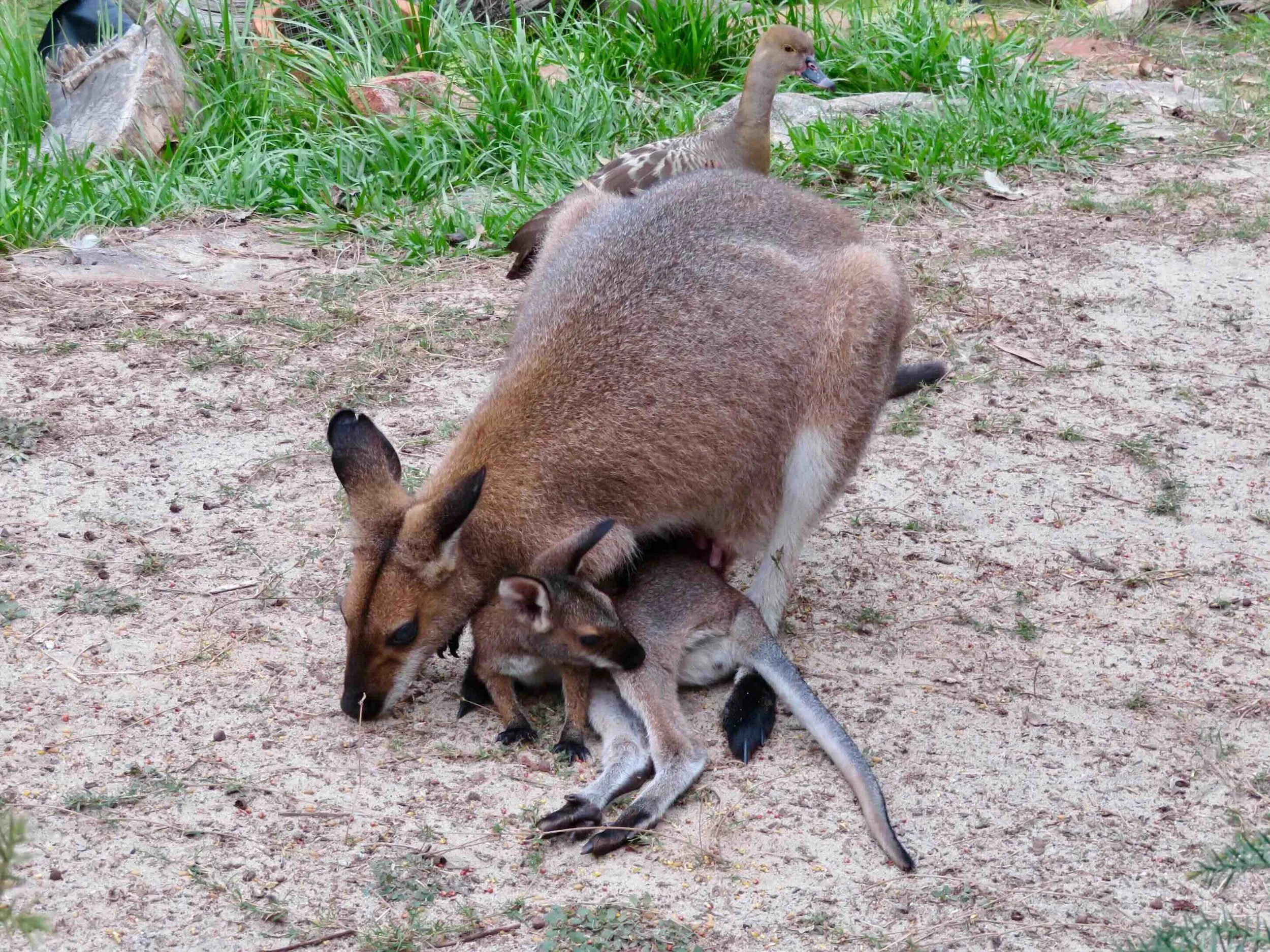
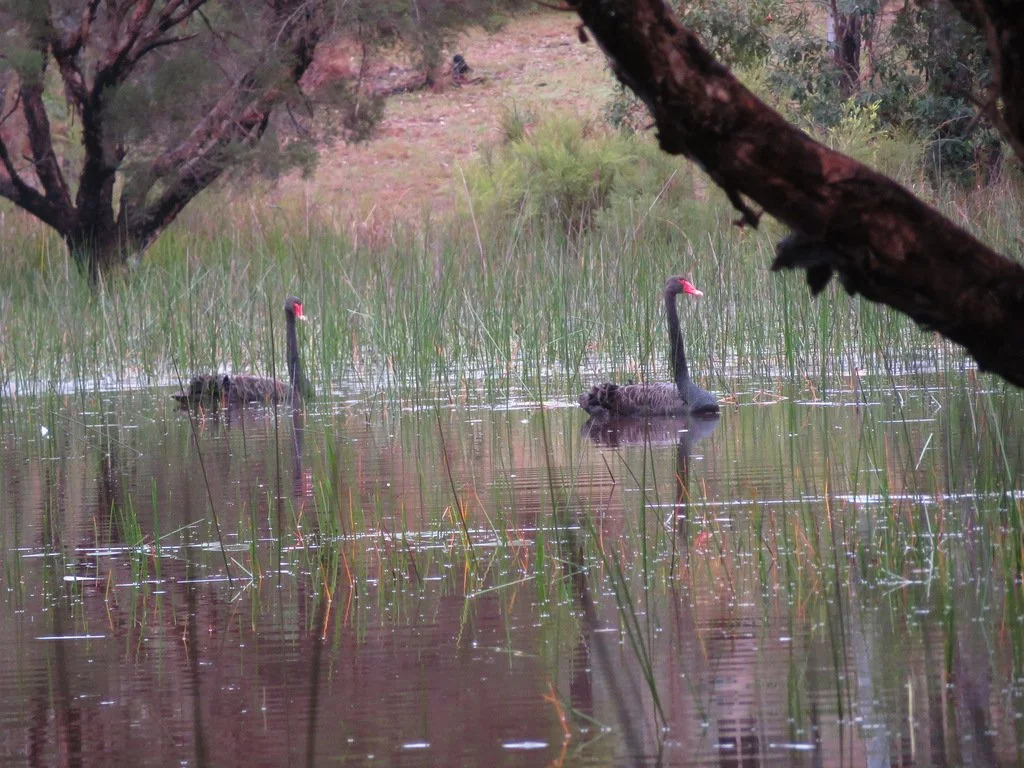
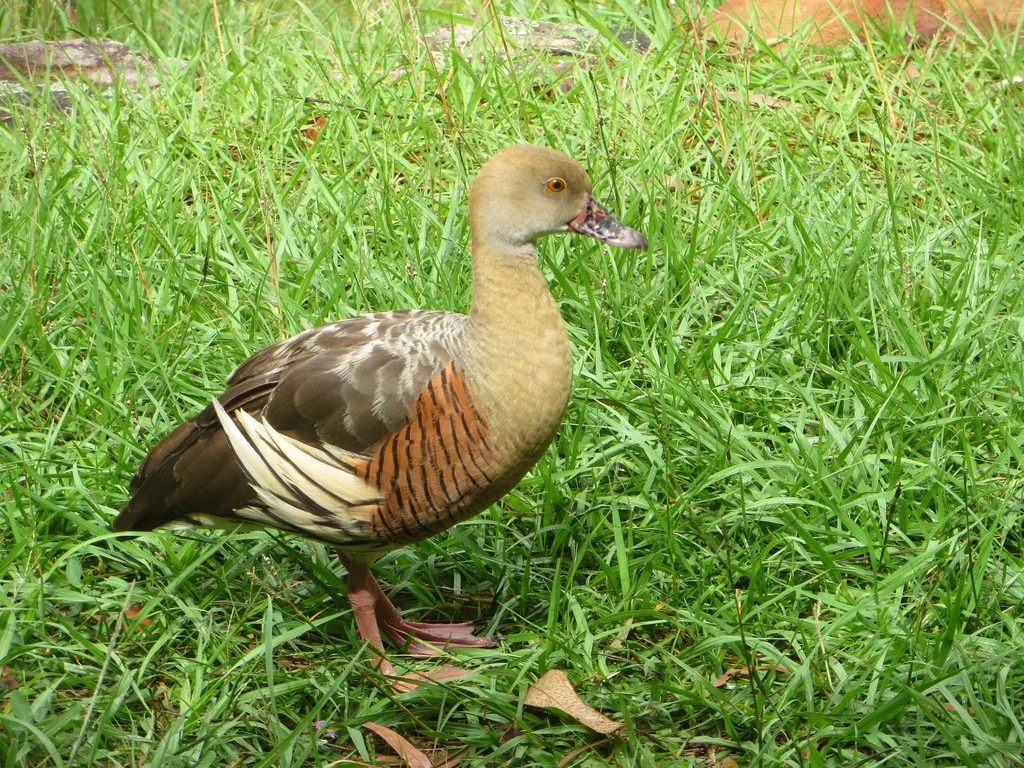
Black swans arrive. Purple swamp hens are mating. Plumed whistling ducks fly in each morning and fly out at night. Red-necked wallaby mother and joey play. Echidnas are found and the beautiful five finger orchids are in bloom.
Rusty Trees
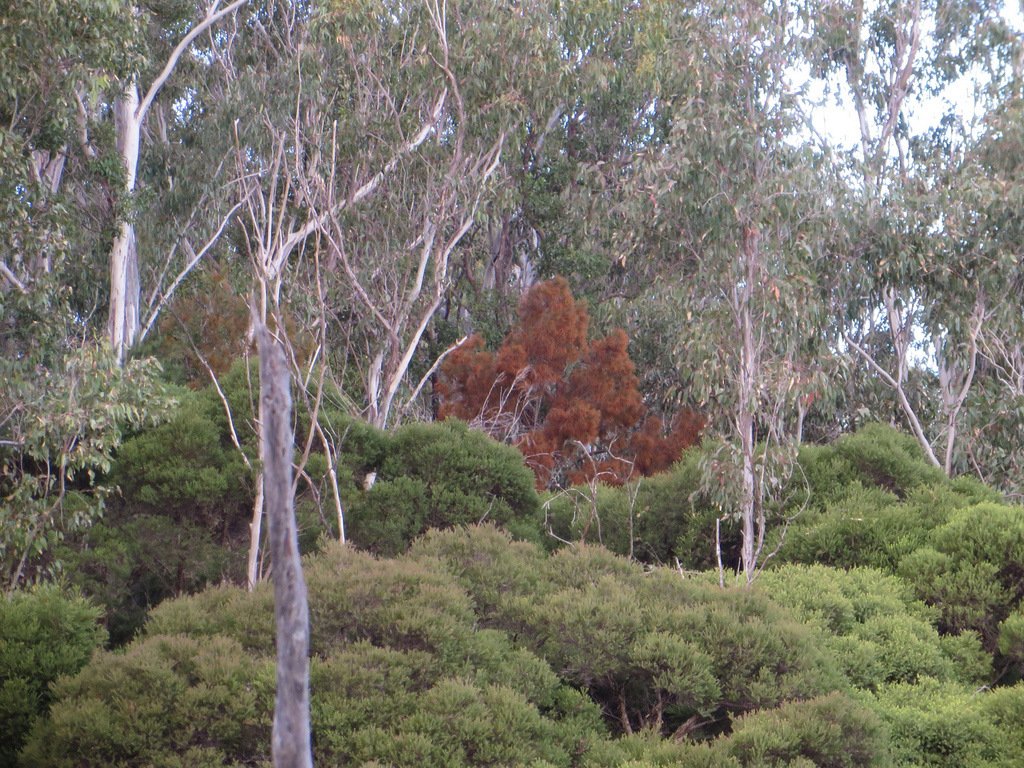
Black She-oak (allocasuarina littoralis)
As the autumn moves into winter, along the roadsides and scattered throughout the bush, splashes of rusty brown appear. The casuarinas are flowering. At times an individual appears so completely brown you could mistake the trees for having died but the vibrant colour reveals it far from dead.
Wedge-tailed eagle
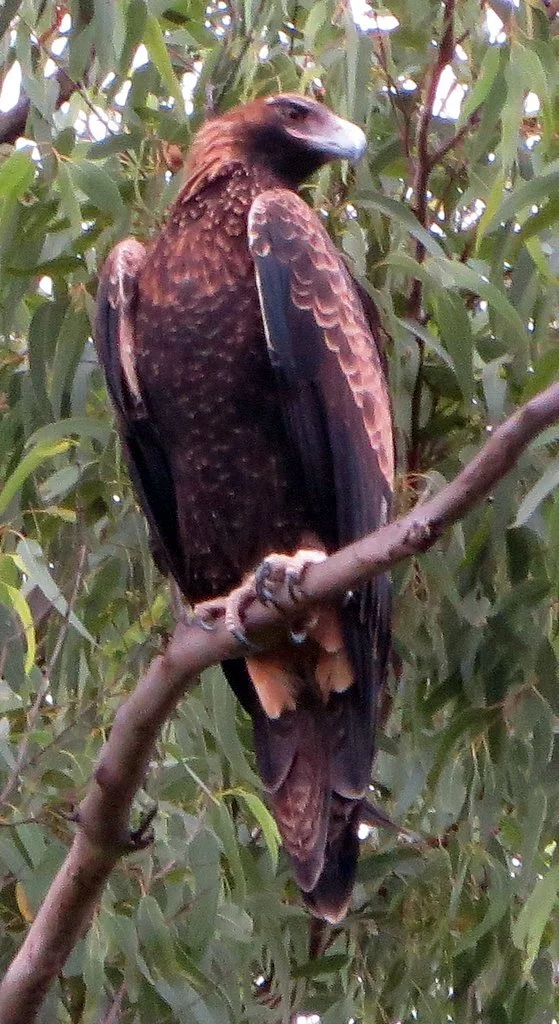
Wedge-tailed eagles (Aquila audax), sometimes called eaglehawks, are big birds. They are Australia's largest bird of prey with a wingspan of up to 2.3m, although this one wasn't that big, perhaps 1.8m. That is a length around the height of a doorway. They weigh around 4kg although the females are larger than the males.
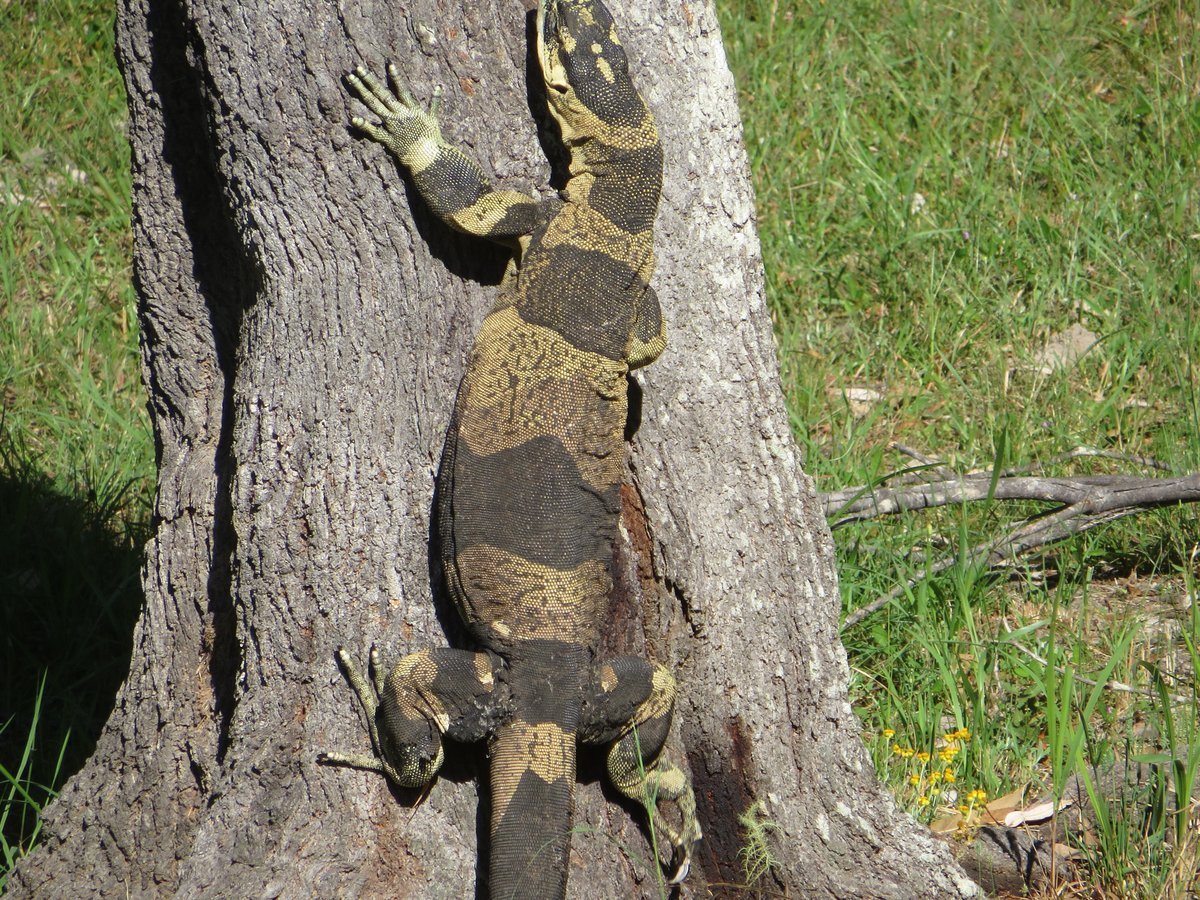
Goannas
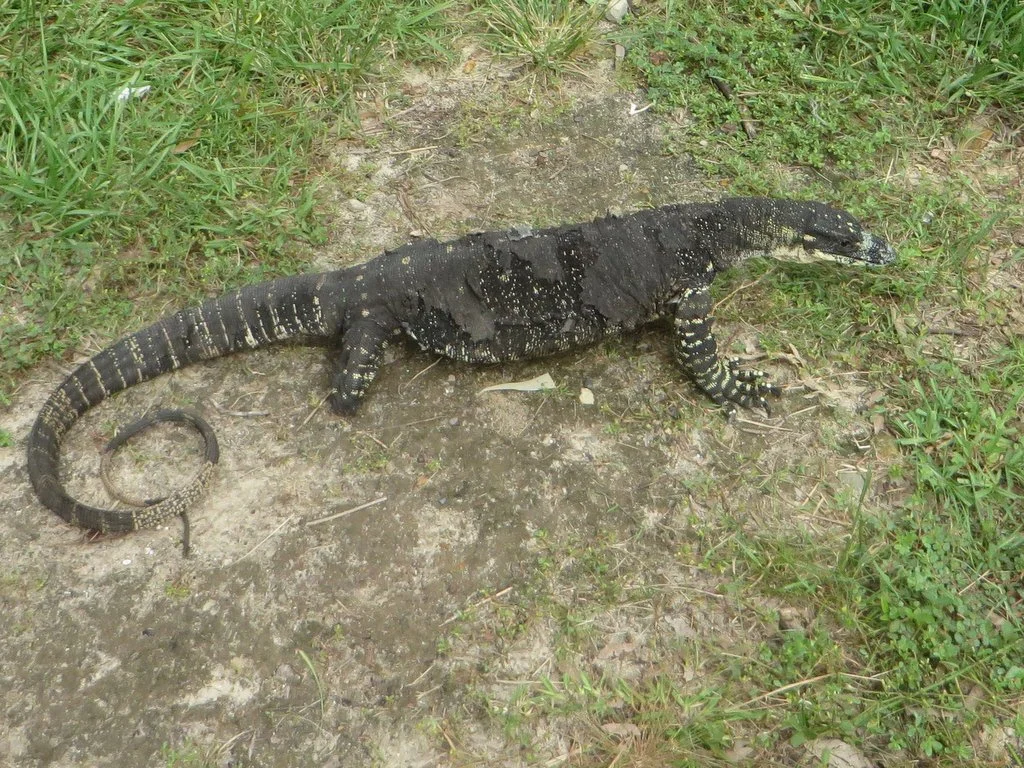
Lace monitors are Australia's second largest goanna. They can grow up to 2m in length so are sizable animals. Lace monitors are fairly common in this region.
There are two colour types of lace monitor, the grey with bands and spots and the Bell's phase with large dramatic bands of yellow and black. Both are from the same species. The Bells Phase is less common in this part of the world.
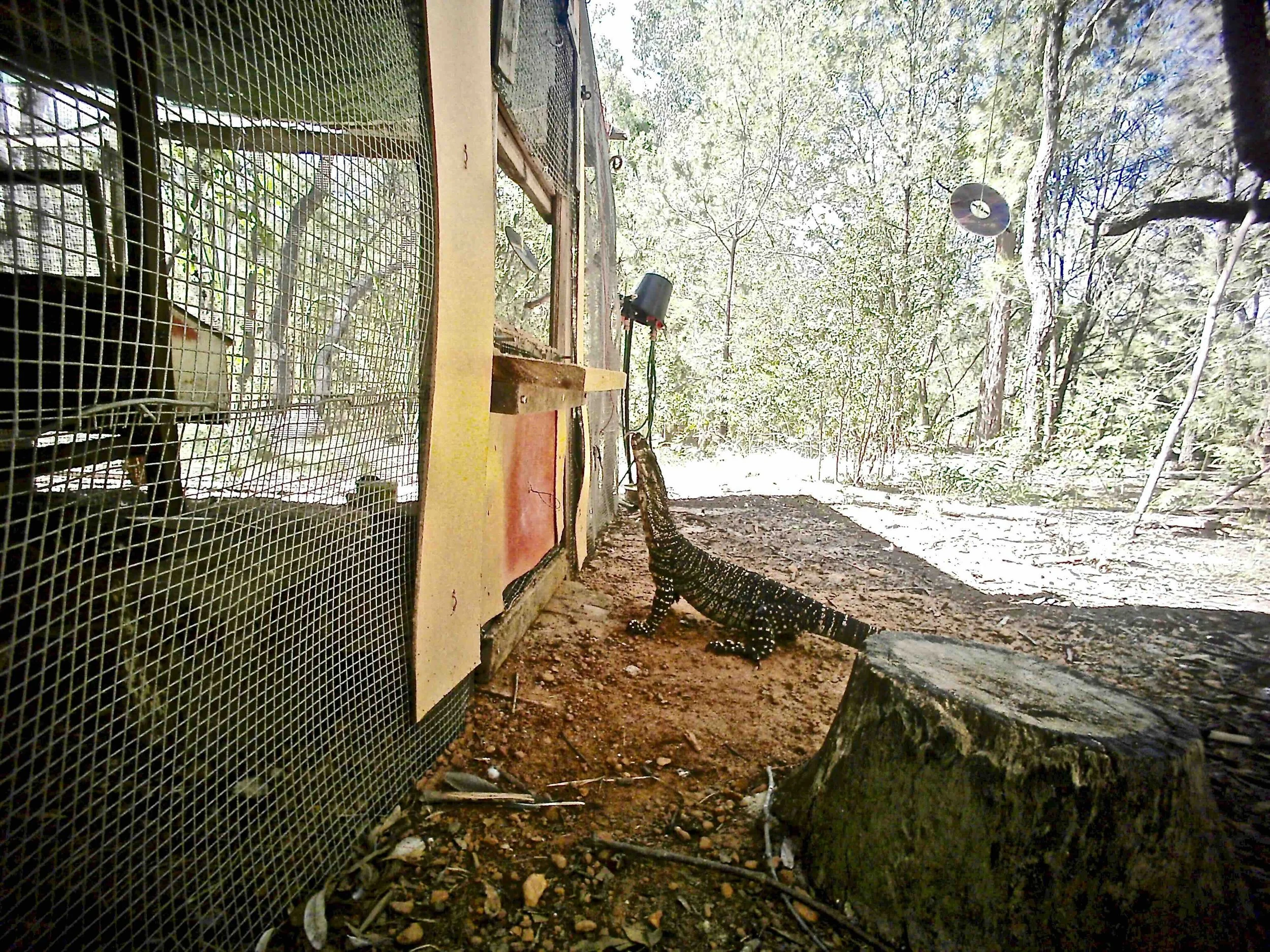
Goannas can Jump!
Goannas can jump! They are smart and learnt as we adapted our chicken pen to try to keep them out.
See how we stopped the goanna getting into the chook pen.
A Week in the Bush
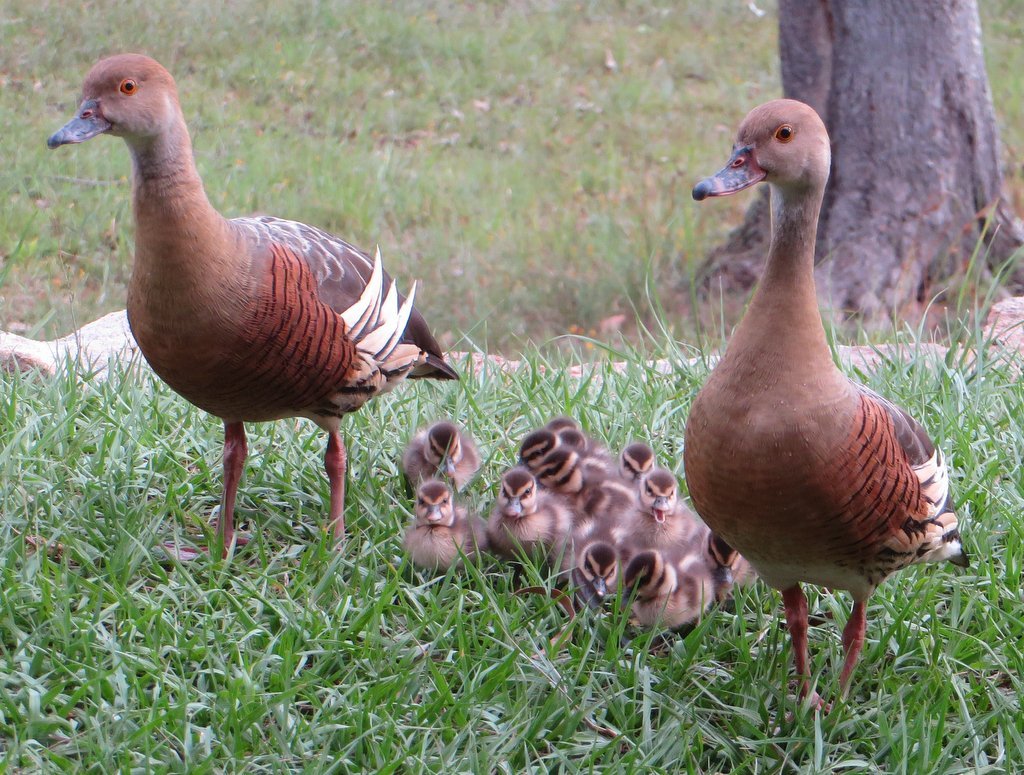
We had a visit from the plumed whistling ducks (dendrocygna eytoni) again but this time two adults we shepherding 13 ducklings. So wonderful. They hung around the pond and gave the little fluff balls their first swim. Later in the day they brought them up onto our front lawn seemingly on display to us.
Check out what the carpet snake has eaten lately. We have other snakes too.
Summer is here …
It all begins with an idea.
Summer has arrived but thankfully the cicadas haven't started to 'sing' yet.
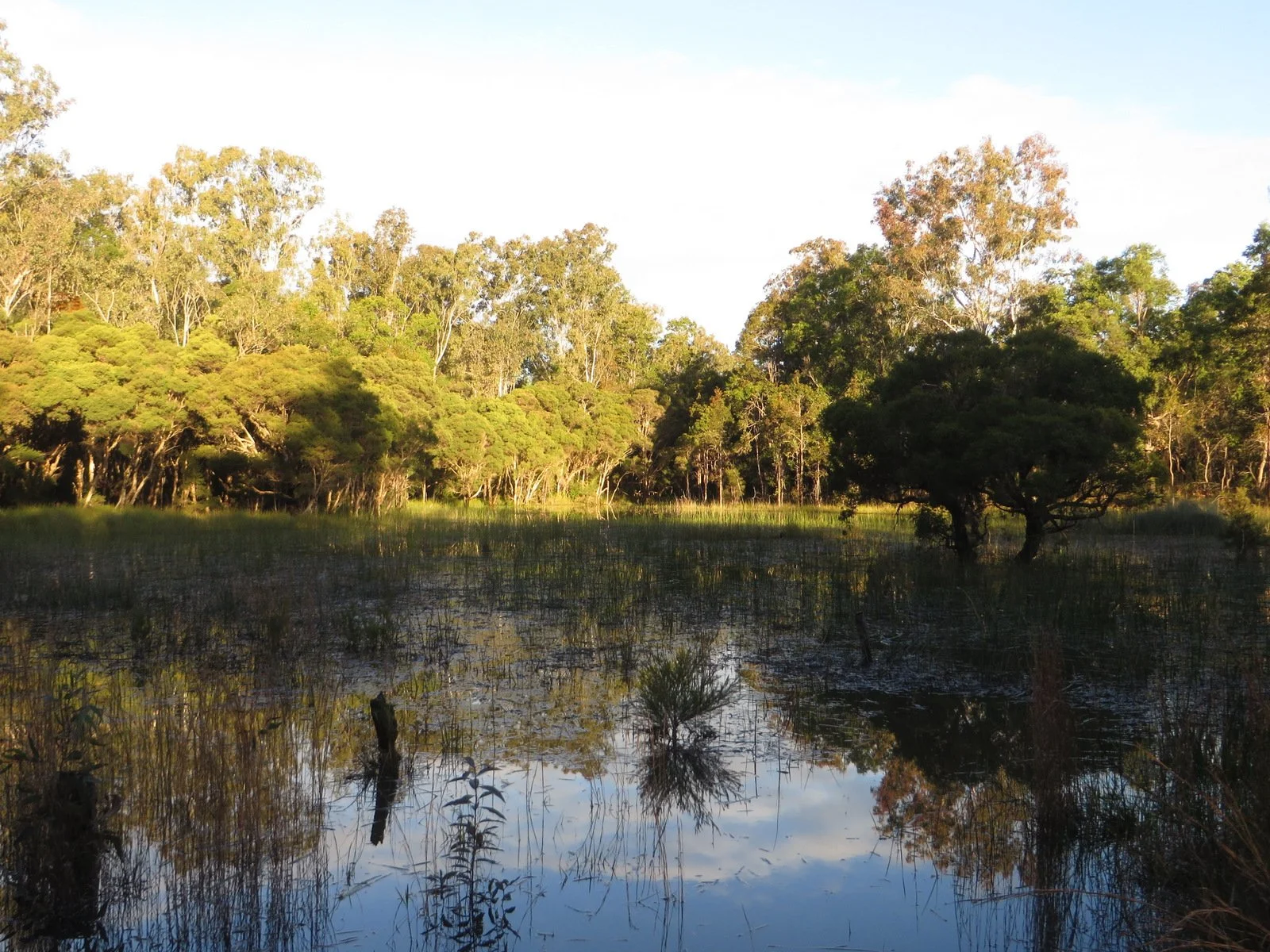
The crunchy grass is finally beginning to grow again after months of little rain. The wetland is still dry even though we've had several thunderstorms rumbling off the mountains to our west. The creeks are all flowing again but only just. We still need more rain. Summer is our rainy season so hopefully the storms will continue.
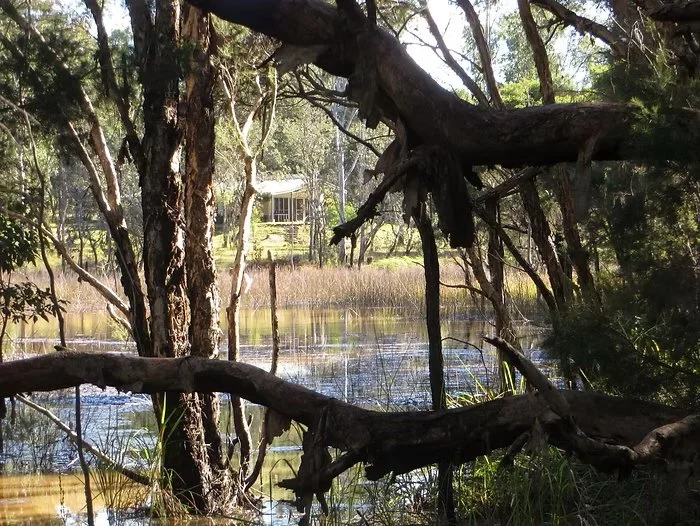
Welcome to Australian Bush Life
Welcome to Australian Bush Life
Our place, Istari, is just north west of Grafton, NSW, in the magnificent Clarence River valley, one of Australia's largest east coast rivers. That's about 3 hours drive south west of Byron Bay, Australia's most easterly point. Not on the coast, as is so popular now, but inland, just before the mountains.