
Letter from Istari - 2026
Our new website
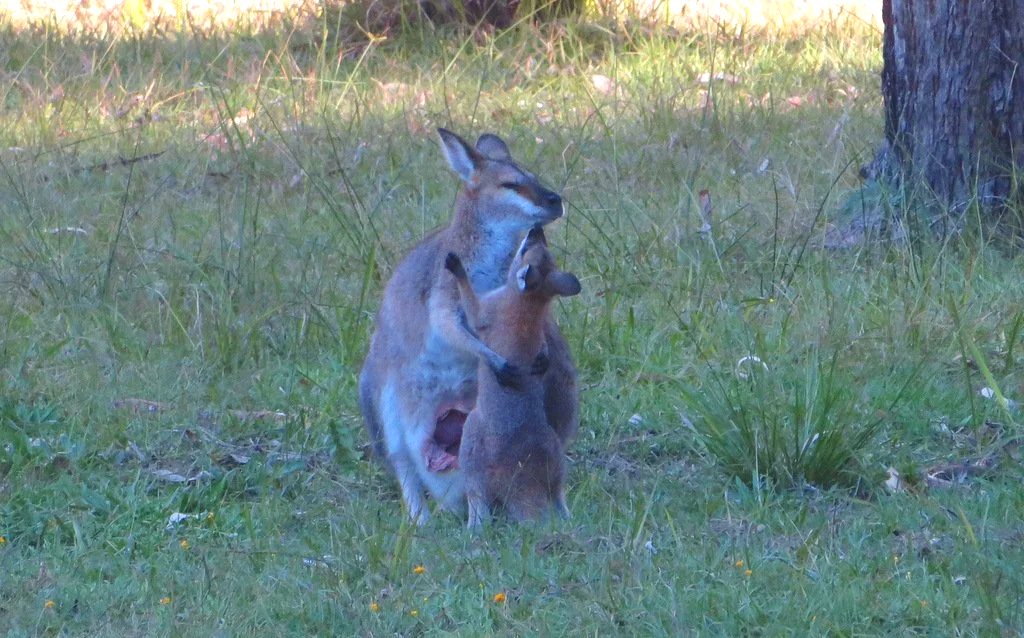
Mother red-necked wallaby playing with her joey.
Over the last few years we have become more involved in the conservation movement in the Clarence Valley. This has kept us busy and sadly we have neglected our website.
We are pleased to see so many people still visiting our website over this time, despite the lack of updates. We got nearly 3000 visits in the last 12 months which we think is fantastic.
After neglecting the website for some time we decided to rebuild the website completely. This is a huge task. We hope you enjoy the updated website.
You can find things easily with our new menu
Observations - gives you a count on species and also a list of identified species
Galleries - all the best photos
Video - a wonderful library showing off our plants and animals
Sounds - check out the sounds of the bush
Blog - all the blogs we have created over the years
Letter from Istari - our letter from Istari, become a Friend of Istari
About - learn how Istari developed
Contact - send us a message or join up to receive our updates
If you can’t find something try out our Search button on the menu above. It will locate what you are looking for on this website whether it is in a blog or a text within any page.
If you are in a gallery you can search the photos by using Find in you browser. We try to label all our photos.
We welcome your comments too. If you like or dislike things in the new website please let us know.
You can leave your comments on our Contact page.
Or you can just email us australianbushlife@icloud.com
We will continue to work on the website so your feedback is more than welcome.
What’s been happening?
Cane Toads
Our biggest challenge over the last few years are cane toads. In 2019 we experienced the worst fires we have ever seen here in the Clarence. The fires had another unfortunate outcome. The cane toads moved across the burnt areas with little trouble. These toads don’t like the bush as it is difficult to get through but the fires removed the bush so they managed to move 50 km south.
They arrived here soon after the 2022 flood. The floods probably added to their spreading. Terry heard them one night while frogging (a unique pass time recording frog calls through the Frog ID app). He is from Queensland so knew their call. The next day Frog ID contacted Terry to confirm the call and Primary Industries were also in contact as they had not recorded them this far south.
This has led to 3 years of learning about the toads and how to deal with them. They are an ecological disaster. Already we have lost our big goannas and we haven’t seen a red-bellied black snake for over a year. This is just the beginning.
We are working on a blog on cane toads and will let you know when it is published.
iNaturalist
We are using iNaturalist to register all the species we find on Istari and the Clarence Valley. iNaturalist is a platform that allows us to load a photo or photos to it and a small army of knowledgeable people identify it. These identifiers often specialise in areas which includes areas like insect, fungi and worms. Areas we would never have the ability to identify.
We are gradually adding in more and more observations. You can follow us on this site.
https://inaturalist.ala.org.au/observations?user_id=istari
Land for Wildlife Co-ordinators
One of the things that has kept us very busy lately has been Land for Wildlife. We have been appointed co-ordinators for the Clarence Valley local government area.
Land for Wildlife is a program for land holders to dedicate some part of their property to conservation. Our main job is to communicate with our members and keep them up to date with things conservation in the Clarence Valley. We also have the privilege of meeting new land holders and walking their property with them. We see the most amazing properties and wonderful people.
We also produce a flora list for them and a report on their property and pass the report onto the state body, Community Environment Network (CEN), where the property is registered.
We are all volunteers and it is quite a bit of work but we love the interaction with land holders.
We have a blog on Land for Wildlife